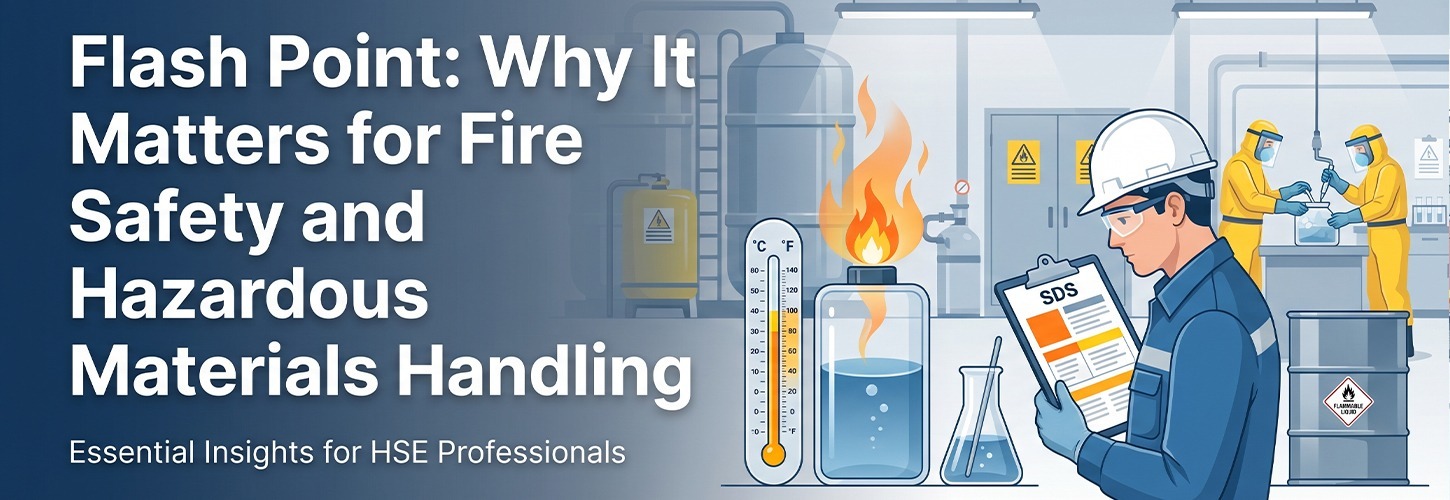
Flash Point: Why It Matters for Fire Safety and Hazardous Materials Handling
Every workplace that stores, transports or handles flammable liquids must understand the importance of flash points. It is one of the key properties used to assess the fire risk of fuels, solvents and other combustible substances. From construction sites and manufacturing facilities to oil and gas operations and chemical plants, understanding flash point supports safer storage, handling and transportation of flammable materials.
What Is Flash Point?
Flash point is the lowest temperature at which a liquid releases enough flammable vapor to ignite when exposed to an ignition source such as a spark, flame, or hot surface. Liquids with a lower flash point ignite more easily and therefore present a higher fire hazard than those with a higher flash point.
Why Is Flash Point Important?
Understanding the flash point of a substance helps organizations identify fire hazards and take the right precautions before an incident occurs. Key benefits include:
Examples of Flash Point
Petrol (Gasoline): Has a very low flash point (around −43°C), so it can catch fire easily. It should always be stored and handled with extra care.
Ethanol (Alcohol): Has a low flash point (around 13°C), which means it can produce flammable vapors even at normal temperatures.
Diesel: Has a higher flash point (above 52°C) than petrol, making it less likely to catch fire. However, it should still be stored and handled safely.
Kerosene: Has a moderate flash point (around 38–72°C). It is less likely to ignite than petrol, but safe storage and handling are still important to prevent fire hazards.
Best Practices for Managing Flash Point Risks
Apart from understanding the flash point of different substances, it is important to have the best practices to manage such risks effectively and prevent fires from occurring in the first place.
Adopting these practices helps reduce fire hazards, protect workers, and create a safer workplace.
Conclusion
Flash point is a critical property used to assess the fire risk of flammable liquids. Understanding how different substances behave when exposed to heat enables organizations to improve fire safety, reduce workplace hazards, and implement safer storage, handling, and transportation practices. At Green World Group, we are committed to supporting safer workplaces by delivering internationally recognized HSE training that equips professionals with practical safety knowledge and skills.


Our Industry-Specific Corporate Training Programs
We deliver tailored training solutions for industrial organizations, focusing on practical HSE skills, compliance, and workforce development to improve safety performance and reduce risks.
Our Recent projects

Contact Us
Kindly call our Experts @ +91 8121563728 / +91 8015527650 or mail us @ kalyan.r@greenwgroup.com / prathyusha.b@greenwgroup.com

Get Your Query Answered / Get Expert Assistance To Choose the Right Course for You Or Your Associates