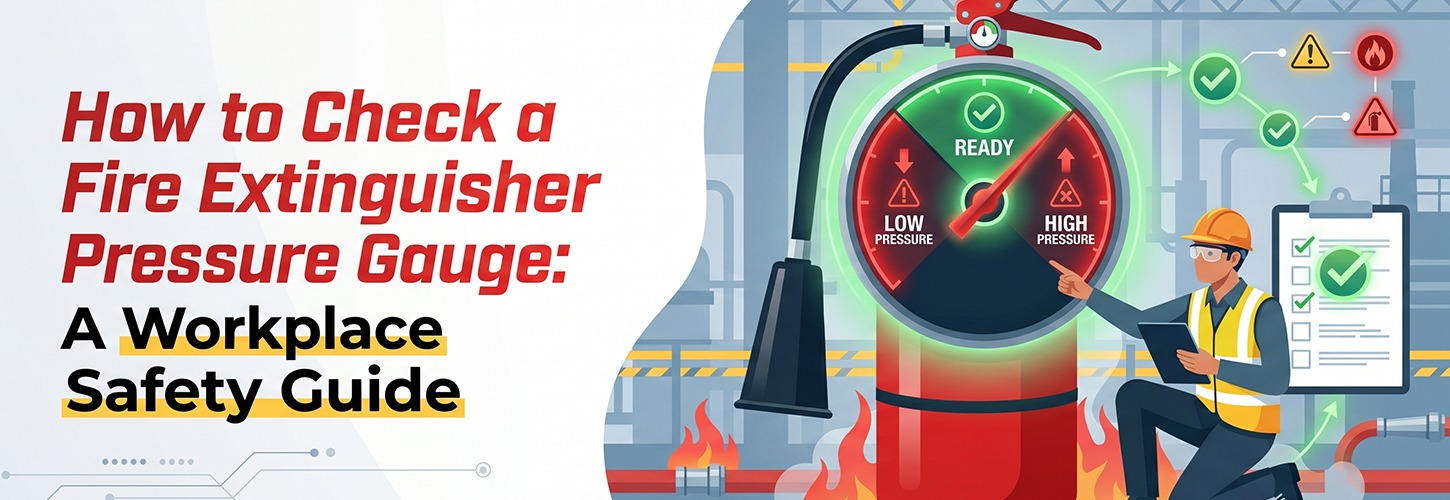
A fire extinguisher pressure gauge is a small indicator that shows whether an extinguisher is properly pressurized and ready for use. It helps ensure there is enough pressure to discharge the extinguishing agent effectively during a fire emergency.
Most fire extinguishers have a pressure gauge, except CO₂ extinguishers, which must be weighed to check their contents. A quick gauge check can also help identify if an extinguisher has lost pressure or may need servicing.
How to Check a Fire Extinguisher Pressure Gauge
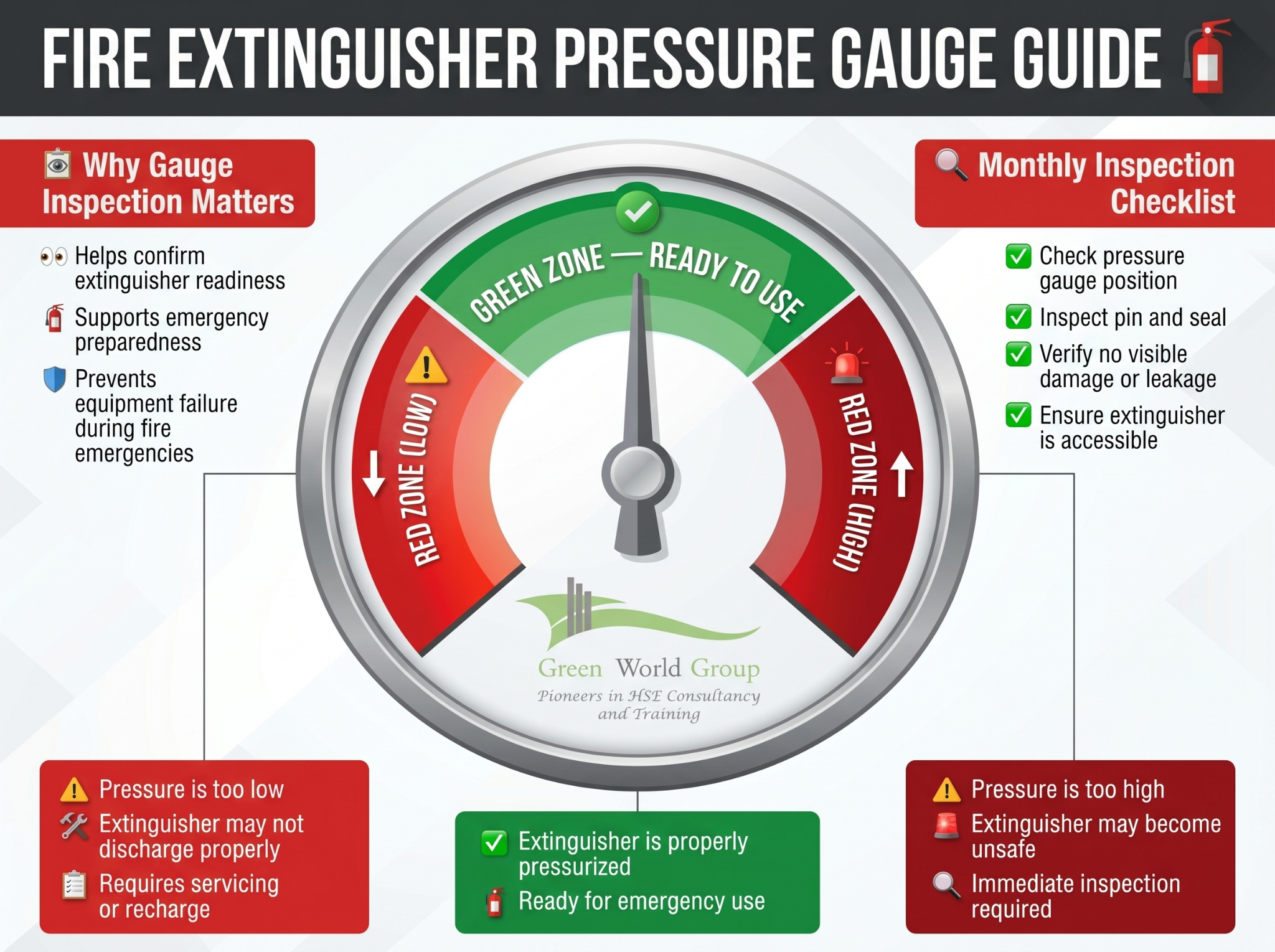
Most fire extinguisher gauges are divided into three sections:
Red Zone (Low Pressure)
A needle in the low-pressure red zone indicates that the extinguisher may not discharge properly. It should be inspected and serviced as soon as possible.
Red Zone (High Pressure)
If the needle is in the high-pressure red zone, the extinguisher may be over-pressurized. This can affect its safe operation and requires immediate attention.
Fire Extinguisher Gauge in Red? Here’s What to Do
If the gauge is in the red zone, report the extinguisher to your supervisor or the designated fire safety representative and arrange for inspection, servicing, recharging, or replacement by a qualified technician.
How to Inspect a Fire Extinguisher Pressure Gauge
A quick monthly inspection can help ensure your extinguisher is always ready when needed:
Common Fire Extinguisher Inspection Mistakes to Avoid
Conclusion
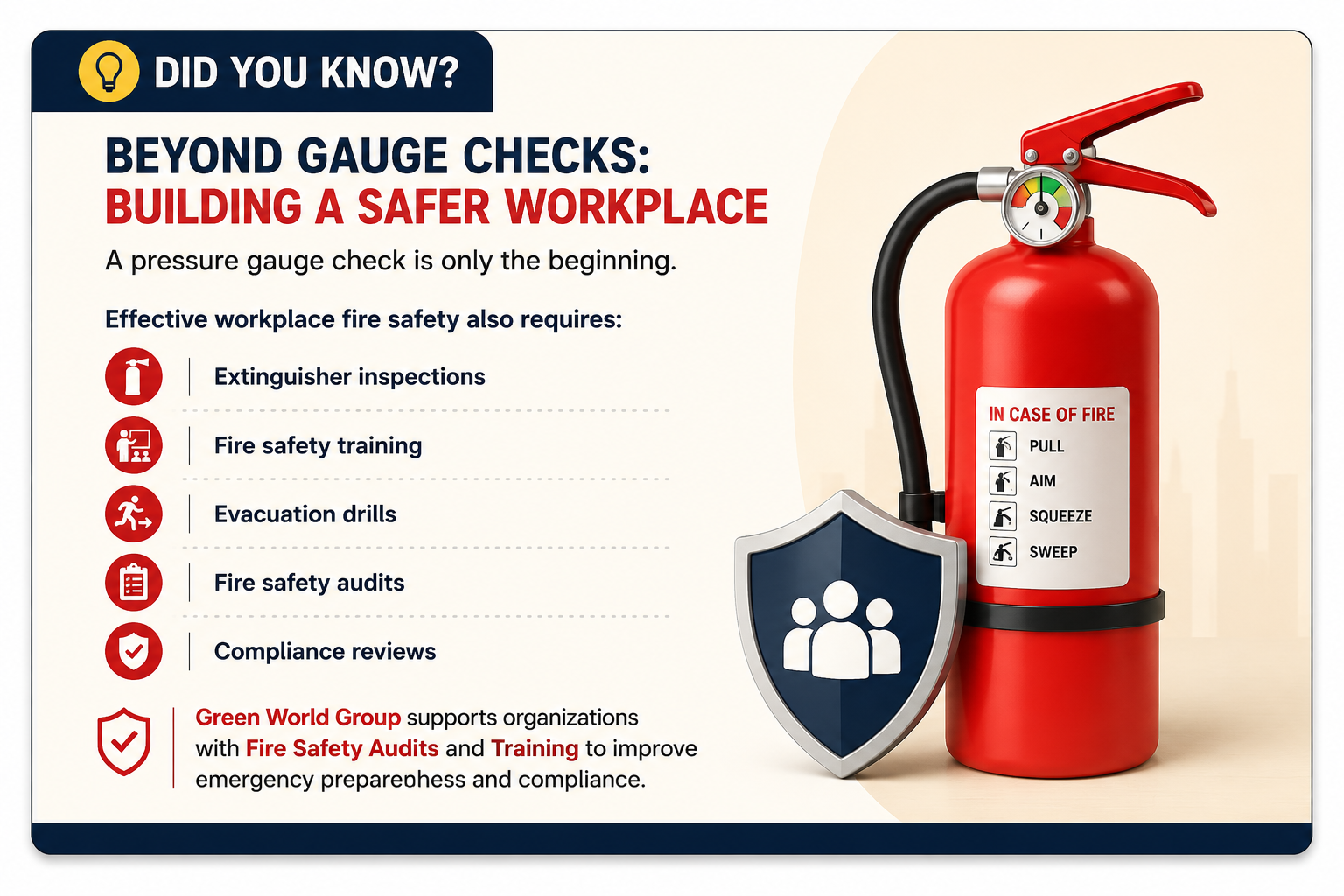
A fire extinguisher is only useful if it works when you need it. Taking a few moments to check the pressure gauge, inspect the extinguisher, and keep up with fire safety training can help ensure your workplace is better prepared for an emergency.
Further Resources:






Our Recent projects


Contact Us
Kindly call our Experts @ +91 8121563728 / +91 8015527650 or mail us @ kalyan.r@greenwgroup.com / prathyusha.b@greenwgroup.com

Get Your Query Answered / Get Expert Assistance To Choose the Right Course for You Or Your Associates