What Is Emergency Evacuation?
Procedure, Plan, Process & Workplace Example
Why Is Emergency Evacuation Important?
Without a clear plan, sudden emergencies trigger panic. A well-constructed Emergency Evacuation Plan helps employees, visitors, and contractors leave a building quickly and safely during an emergency. It provides clear instructions on evacuation routes, assembly points, alarm systems, and individual responsibilities, helping to reduce confusion and improve response times when every second counts.
What Is Emergency Evacuation?
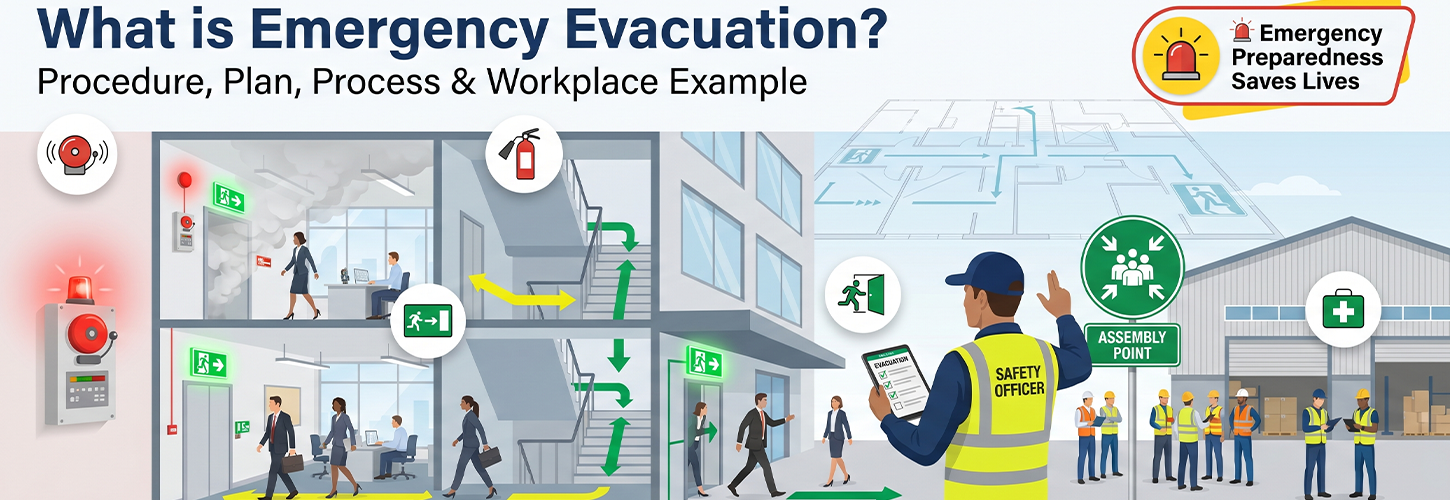
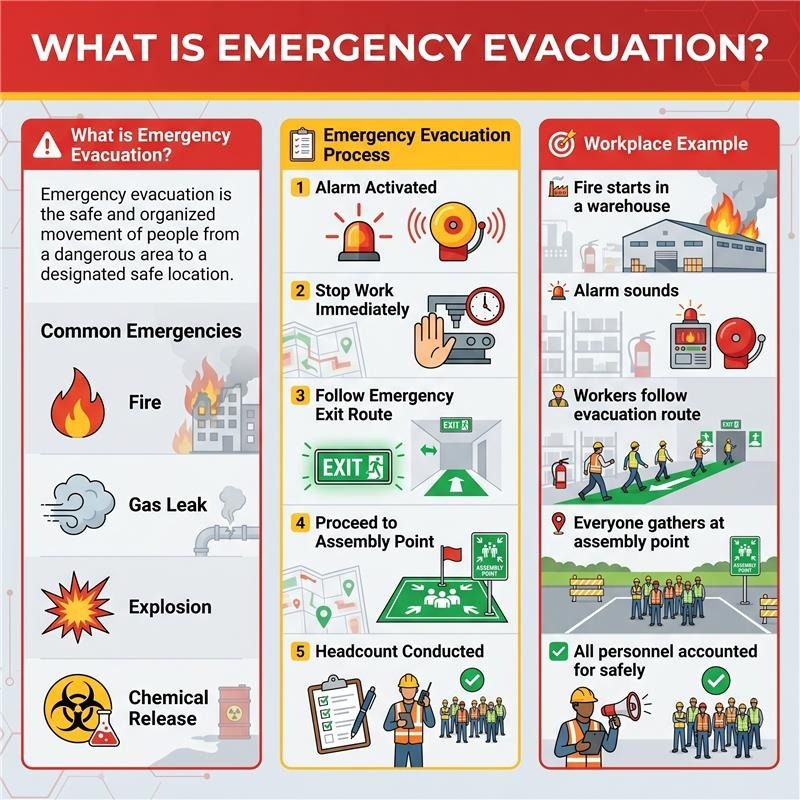
Emergency evacuation is the organised movement of people from a potentially dangerous location to a safer area during an emergency. It is an important part of workplace emergency preparedness and helps protect employees, visitors, contractors, and other people present at the site.
An effective evacuation procedure explains how people should respond to an emergency, which routes they should follow, where they should assemble, and how everyone will be accounted for after leaving the building.
Key Elements of an Emergency Evacuation Plan
An effective emergency evacuation plan should include the following important elements:
Planning
Identify potential emergencies, evacuation routes, exits, and assembly points.
Communication
Provide clear emergency alerts and instructions to everyone in the workplace.
Evacuation
Ensure people can leave the affected area safely using designated routes.
Accountability
Account for employees, visitors, and contractors at the assembly point.
Recovery
Review the response and identify improvements after the emergency.
Emergency Evacuation Procedure
Employees should understand the evacuation procedure and follow the instructions given by the designated emergency response team.
Recognise the Emergency
Identify the emergency and remain alert to alarms and emergency announcements.
Activate the Alarm
Raise the alarm and notify the appropriate emergency response personnel.
Follow Evacuation Routes
Use the designated emergency exits and follow the marked evacuation routes.
Assist Others
Follow the assigned emergency arrangements and assist people who need support.
Reach the Assembly Point
Move to the designated safe assembly point without returning to the building.
Account for Everyone
Report to the responsible person so that everyone can be accounted for.
Importance of Mock Drills
Mock drills help employees understand how to respond during an emergency. They provide practical experience of evacuation procedures, emergency alarms, exit routes, and assembly points.
Regular practice helps identify gaps in the emergency plan, improve coordination, and build confidence among employees and emergency response teams.
Organisations should conduct mock drills periodically and review the results to improve workplace emergency preparedness.

Related Fire Safety Resources
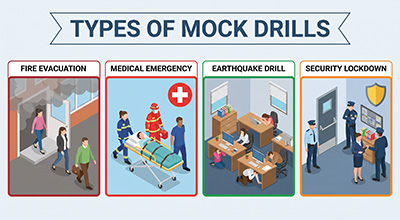
Types of Mock Drills
Read More →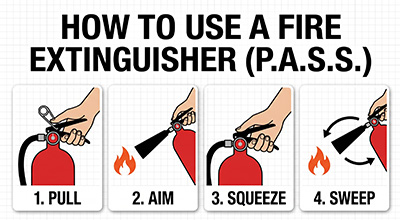
How to Use a Fire Extinguisher
Watch Video →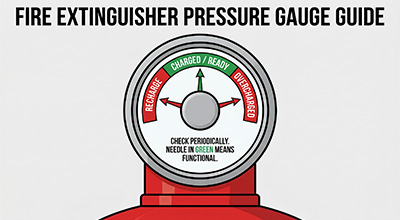
Fire Extinguisher Pressure Gauge
Read More →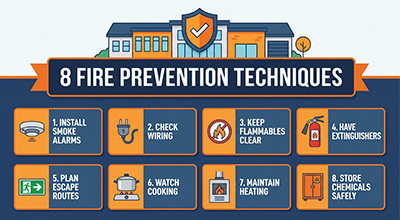
8 Fire Prevention Techniques
Read More →
Essential Fire Safety Skills
Read More →
Regular Fire Drill
Read More →Conclusion
Emergency evacuation planning is an essential part of workplace safety. A clear plan, properly marked exit routes, trained employees, effective communication, and regular mock drills can help organisations respond more effectively during emergencies.
Every employee should understand the evacuation procedure and know where to go when an emergency occurs. Regular reviews and practice help strengthen emergency preparedness and support a safer workplace.
Improve Workplace Emergency Preparedness
Explore workplace safety training and fire safety programmes with Green World Group.
Explore Green World GroupContact Us
Kindly call our Experts @ +91 81215 63728 / +91 80155 27650 or mail us @ kalyan.r@greenwgroup.com / prathyusha.b@greenwgroup.com

Get Your Query Answered / Get Expert Assistance To Choose the Right Course for You Or Your Associates