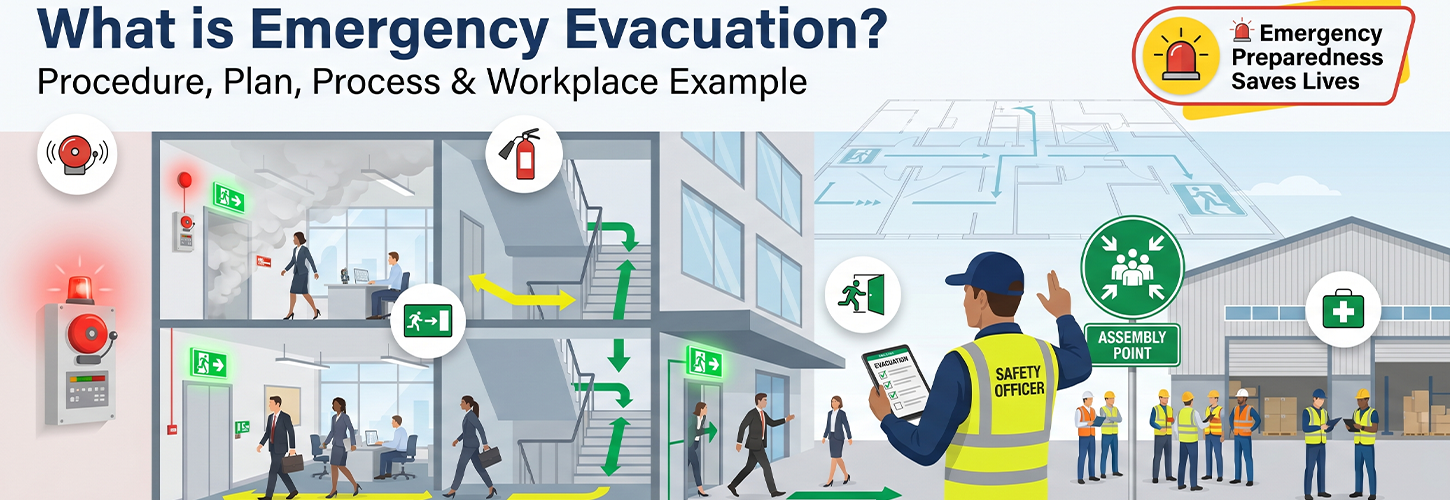
What is Emergency Evacuation? Procedure, Plan, Process & Workplace Example
Emergency Evacuation
Without a clear plan, sudden emergencies trigger panic. A well-constructed Emergency Evacuation Plan helps employees, visitors, and contractors leave a building quickly and safely during an emergency. It provides clear instructions on evacuation routes, assembly points, alarm systems, and individual responsibilities, helping to reduce confusion and improve response times when every second counts.
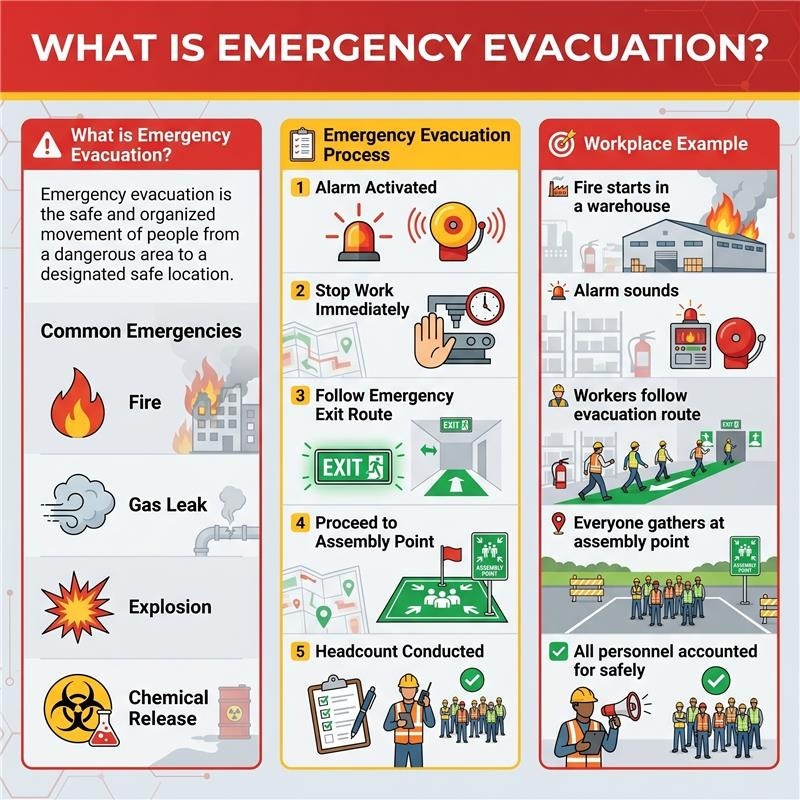
The 5 Pillars of the Evacuation Process
These five steps help ensure a safe, organized, and effective response during emergencies.
Step-by-step Emergency Evacuation Procedure
Example Scenario : Fire Emergency Evacuation
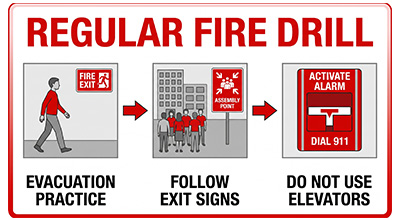
A fire breaks out in a warehouse, triggering the fire alarm. Employees stop work, evacuate through the nearest emergency exits, and gather at the assembly point. Supervisors conduct a headcount to ensure everyone is safe.
Benefits of Emergency Evacuation Drills
Conclusion
Regular drills, fire risk assessments, employee training and safety audits strengthen emergency preparedness and help create a safer workplace. Together, these measures play a vital role in protecting people, property, and business operations.

Our Industry-Specific Corporate Training Programs
We deliver tailored training solutions for industrial organizations, focusing on practical HSE skills, compliance, and workforce development to improve safety performance and reduce risks.
Our Recent projects




Contact Us
Kindly call our Experts @ +91 8121563728 / +91 8015527650 or mail us @ kalyan.r@greenwgroup.com / prathyusha.b@greenwgroup.com

Get Your Query Answered / Get Expert Assistance To Choose the Right Course for You Or Your Associates