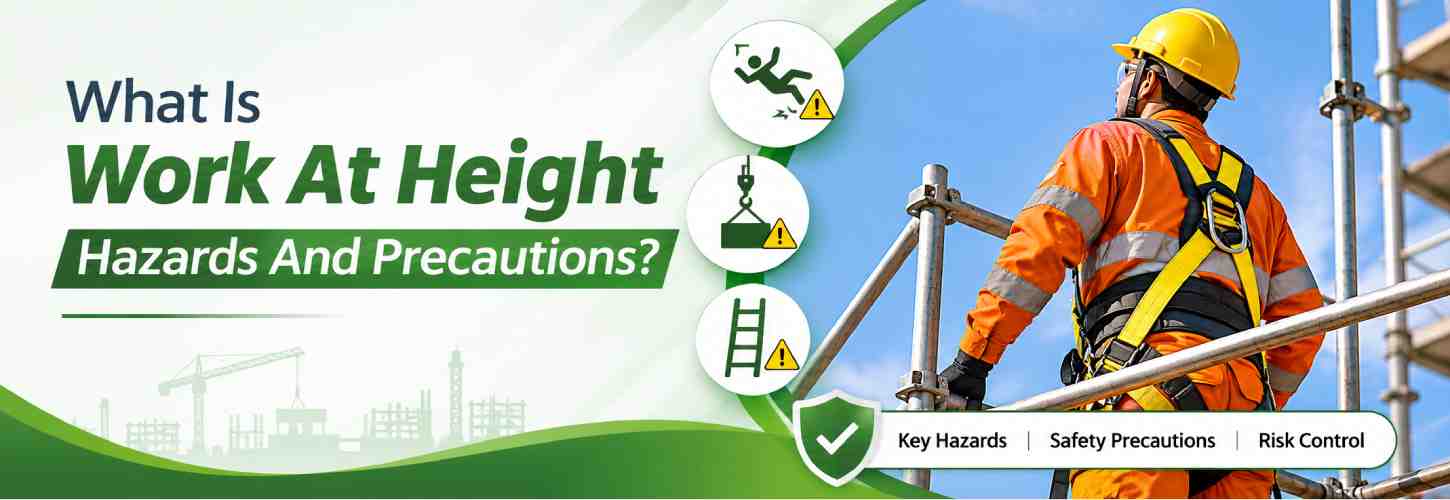
Work at Height: Understanding the Hazards and Precautions
Working at height refers to workplace environments where people can potentially fall and get injured. Since working at height remains among the biggest causes of major workplace injuries and fatalities, it is essential to understand the common work at height hazards and precautions to address them.
Common Work at Height Hazards

Falls From Heights
Industries like construction sites pose a huge risk of falling from heights. Failing to include appropriate safety measures in working-at-height workplaces can lead to serious consequences. Even a fall from lower elevations can also become a cause for severe injuries.
✓ Precautions
- Install suitable guardrails.
- Provide safety nets.
- Use Personal Fall Protection Equipment.
- Provide appropriate safety training.
- Use a suitable restraint system.

Falling Objects
Falling objects can expose workers to serious hazards in diverse workplaces such as warehouses and retail stores. Hand-held equipment such as saws or drills, and materials such as wood pieces, nails and debris, can cause serious injuries and may even be fatal.
✓ Precautions
- Securely store tools and materials.
- Use appropriate Personal Protective Equipment.
- Carry out regular workplace safety risk assessments.

Unstable Working Surfaces
Unstable work surfaces can lead workers into dangerous situations due to their instability. These surfaces include wet floors, slippery surfaces, stairs, level changes and uneven terrain. They can prevent workers from safely performing their work.
✓ Precautions
- Maintain adequate lighting in work areas.
- Use warning signs wherever applicable.
- Clean dirt, debris and other materials regularly.
- Postpone work during poor weather or unsafe conditions.
- Provide appropriate safety training.
- Wear suitable non-slip safety footwear.

Lack of Safety Equipment
Improper use or failure to use the right fall protection equipment increases the risk of injury. This includes using equipment that is not suitable for the specific task or failing to maintain it properly.
✓ Precautions
- Choose the correct ladder, safety nets, crawl boards, lifts or scaffolds.
- Train workers to select and use safety equipment effectively.
- Inspect and maintain work-at-height equipment regularly.

Poor Edge Protection
Insufficient edge protection while working at height intensifies the risk of falling and poses significant dangers. Proper edge protection is important in work environments that involve roof edges, elevated work surfaces and platforms.
✓ Precautions
- Conduct risk assessments for platform and scaffolding edges.
- Use suitable fall arrest systems.
- Install safety nets where required.
- Provide appropriate toe boards and guardrails.
Improve Your Safety with Green World Group
Identifying potential hazards while working at height and tackling them with the right control measures is crucial to reducing workplace risks and ensuring workers' safety. Green World Group equips learners with practical knowledge to work at heights safely. Contact us to discuss a customised learning solution.
Contact Us
Kindly call our Experts @ +91 81215 63728 / +91 80155 27650 or mail us @ kalyan.r@greenwgroup.com / prathyusha.b@greenwgroup.com

Get Your Query Answered / Get Expert Assistance To Choose the Right Course for You Or Your Associates