Employers use Job Safety Analysis (JSA), a powerful tool, to identify and evaluate workplace hazards. It’s a process that involves breaking down a job into its individual tasks, looking at each one to see if there are any potential dangers, and coming up with
ways to control those dangers.
By ensuring that all hazards are identified and addressed prior to work beginning, JSA aims to make employees’ workplaces safer. Employers can cut down on workplace illnesses, injuries, and accidents by using JSA.
The JSA Process Typically Involves the Inclusion of the Following Stages:

JSA Safety Applications and Benefits
JSA can be used in a wide variety of industries, including construction, manufacturing, healthcare, and agriculture, among others. It is particularly useful in industries where the work is physically demanding or involves exposure to hazardous materials or equipment.
In addition to improving safety, JSA can also have other benefits for employers. For example, by identifying and addressing hazards, employers can reduce the costs associated with accidents and injuries, such as medical expenses, workers’ compensation claims, and lost productivity. JSA can also help employers comply with occupational health and safety regulations and demonstrate their commitment to
employee safety.
There are various reasons why JSA (Job Safety Analysis) is necessary, including but not limited to:
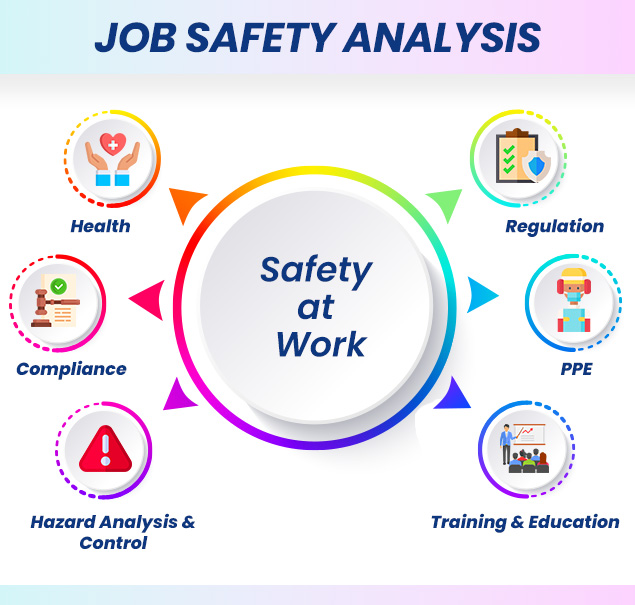
Overall, JSA is crucial in ensuring a safe work environment, protecting employees, and preventing accidents and injuries.
Job Safety Analysis and Job Hazard Analysis
JSA (Job Safety Analysis) and JHA (Job Hazard Analysis) are both risk assessment techniques used to identify and mitigate workplace hazards. JSA focuses on analyzing hazards at the task level, while JHA takes a broader perspective, assessing hazards across the entire job or work area. JSA breaks down job tasks to identify and control hazards, while JHA provides a comprehensive overview of hazards in the work environment.

Activity Hazard Analysis Important considerations
The fact that JSA should be an ever-evolving process is an essential feature. JSA should be updated to reflect any new hazards or job tasks that are discovered. Additionally, employers should examine and evaluate the effectiveness of existing controls on a regular basis, making any necessary adjustments.
When carrying out JSA, another crucial factor to take into account is ensuring that it is carried out by individuals who possess the necessary training and expertise. These people ought to be familiar with the tasks that are being analyzed on the job and the dangers that come with them. Additionally, they should be able to identify appropriate controls for the identified hazards and have a solid comprehension of safety regulations and standards.
Communication of the JSA results to all employees involved in the analyzed job or task is also critical. Safety meetings, training sessions, or other forms of communication can be used to accomplish this. The controls that have been put in place to deal with the risks
that come with their job should be made clear to employees. By keeping representatives educated and engaged with the JSA cycle, businesses can increment security mindfulness and advance a culture of wellbeing in the work environment.
In conclusion, employers can use the JSA to identify and control workplace hazards. Employers can promote a culture of safety, reduce costs associated with accidents and injuries, and create a safer work environment by involving employees in the process, regularly reviewing and updating the JSA, and communicating the results to all employees.

Contact Us
Kindly call our Experts @ +91 8121563728 / +91 8015527650 or mail us @ kalyan.r@greenworldsafety.com / indumanasa.m@greenwgroup.com

Get Your Query Answered / Get Expert Assistance To Choose the Right Course for You Or Your Associates