Use of Personal Protective Equipment (PPE)
PPE, or Personal Protective Equipment, has a crucial role in safer workplaces. According to OSHA , the effective use of PPE helps prevent occupational diseases and injuries. Every industry has certain risks or hazards. Hence, it is important to understand the proper use of personal protective equipment and its benefits in achieving a safer workplace.

What Is Personal Protective Equipment?
What is PPE?
Personal Protective Equipment (PPE) acts as a barrier between the wearer and the harmful agent, thus minimizing exposure to potential hazards and risks.
Without the use of PPE, workers may expose themselves to the risk of injuries or illnesses that may arise from workplace hazards such as chemical, physical, radiological, electrical, mechanical, and many others.
One of the vital aspects to enhance workplace safety is the appropriate use of PPE.
What Is PPE Safety?
PPE safety is the method of making sure that people effectively adhere to using the right PPE relevant to their workplace and job roles. This ensures employees are safe while performing tasks in the workplace.
Industries such as healthcare, construction and engineering must ensure that workers are protected against possible occupational health and safety risks.
Importance of PPE in the Workplace
From the release of gases and corrosive chemicals to sharp objects in the workplace, Personal Protective Equipment plays a significant role in protecting workers from injuries and accidents.
Provides an additional layer of security against workplace injuries.
Equips employees with confidence to perform tasks effectively.
Mitigates the risk of injuries, illnesses and long-term health impacts.
Supports productivity and operational efficiency through worker confidence.
Demonstrates employer commitment to HSE compliance and workforce well-being.
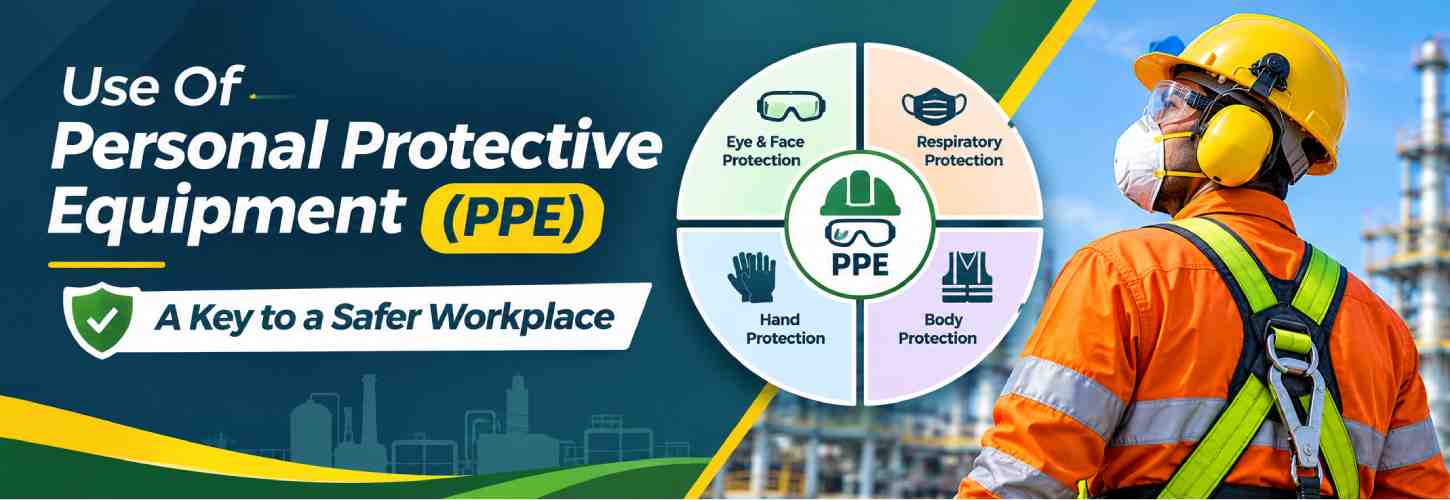
4 Common Types of PPE With Examples
1. Face and Eye Protection
This kind of PPE covers goggles, face shields, safety glasses, and welding helmets. Using such PPE protects the eyes and face of workers from flying debris, chemical splashes and harmful radiation.
2. Respiratory Protection
PPE equipment such as masks and respirators helps protect workers from inhaling hazardous fumes, vapours, dust and gases.
3. Skin and Body Protection
Skin and body protection helps protect workers from physical hazards. This category includes several forms of protection depending on the part of the body exposed to workplace risks.
4. Hearing Protection
Hearing protection like earplugs and earmuffs protects employees in noisy environments from high levels of noise and helps reduce the risk of noise-related hearing damage.
Improve Your PPE Safety with Green World Group
Green World Group offers engaging health and safety training that helps make workplaces safer and more efficient. Our comprehensive Personal Protective Equipment training highlights the effective and appropriate use of PPE, key principles and practices in using PPE, and outlines the responsibilities of employees and employers. Our training helps make PPE an effective element in overall occupational health and safety management.
Contact Us
Kindly call our Experts @ +91 8121563728 / +91 8015527650 or mail us @ kalyan.r@greenwgroup.com / prathyusha.b@greenwgroup.com

Get Your Query Answered / Get Expert Assistance To Choose the Right Course for You Or Your Associates