
Introduction
Workplace safety depends not only on rules and procedures but also on how organizations respond when incidents occur. In many workplaces, the immediate reaction is to blame individuals rather than understand the factors that led to the incident.
According to the International Labour Organization (ILO), around 2.78 million workers die each year due to occupational accidents and work-related diseases, highlighting the need for stronger safety practices.
This blog explores why employees often hesitate to report safety incidents and how organizations can improve workplace safety by promoting a more open, learning-focused culture.
What is Blame culture and learning culture in Workplace Safety
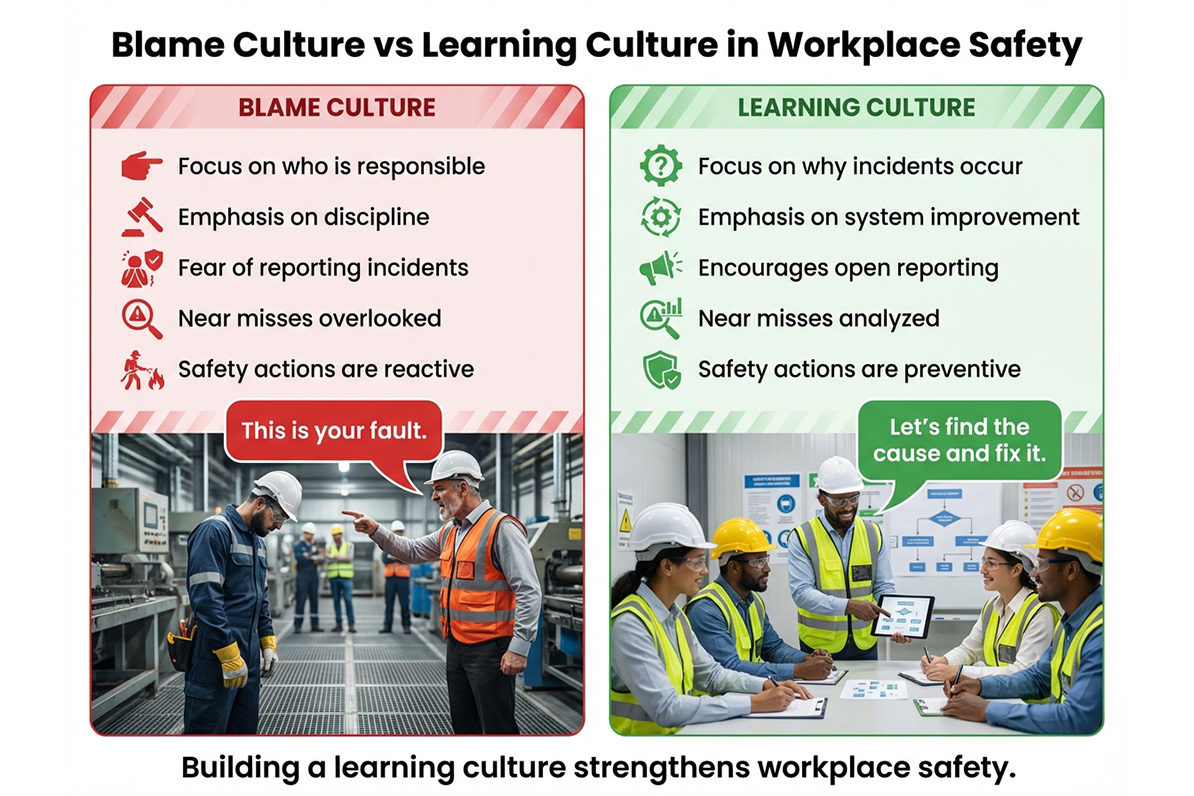
A blame culture occurs when organizations focus on who made the mistake rather than understanding why the incident happened.
A learning culture, on the other hand, focuses on identifying underlying causes and improving systems to prevent similar incidents in the future.
Example Scenario
A container spills while a worker is handling chemicals.
Blame Culture Response: The worker is blamed for incorrect handling.
Learning Culture Response: The investigation examines storage methods, labelling practices, handling procedures, and training needs to improve safety systems.
When employees fear criticism or punishment, they may hesitate to report hazards, near misses, or unsafe conditions. As a result, important safety information may remain unreported, allowing potential risks to stay hidden until they lead to serious incidents.
To know what is near miss, its importance, Investigation and Reportig procedure to enchance workplace safety. Click here
Impact of Blame Culture on Workplace Safety
1. Underreporting of Incidents
When employees fear negative consequences, they may avoid reporting near misses or hazards. According to the National Safety Council (NSC), many serious workplace accidents are preceded by unreported near misses.
2. Loss of Trust
Blame cultures reduce trust between employees and management, making workers hesitant to raise safety concerns.
3. Repeated Incidents
Focusing only on individual mistakes prevents organizations from identifying deeper system failures, allowing similar incidents to occur again.
4. Limited Incident Investigations
Blame-focused investigations often concentrate only on human error, ignoring factors such as work processes, equipment condition, supervision, communication, or training
5. Unresolved Workplace Hazards
Without identifying root causes, hazards may remain in the workplace, increasing the risk of recurring incidents.
6. Reduced Safety Learning
Organizations lose valuable learning opportunities when incidents are treated only as individual mistakes rather than system improvement opportunities.
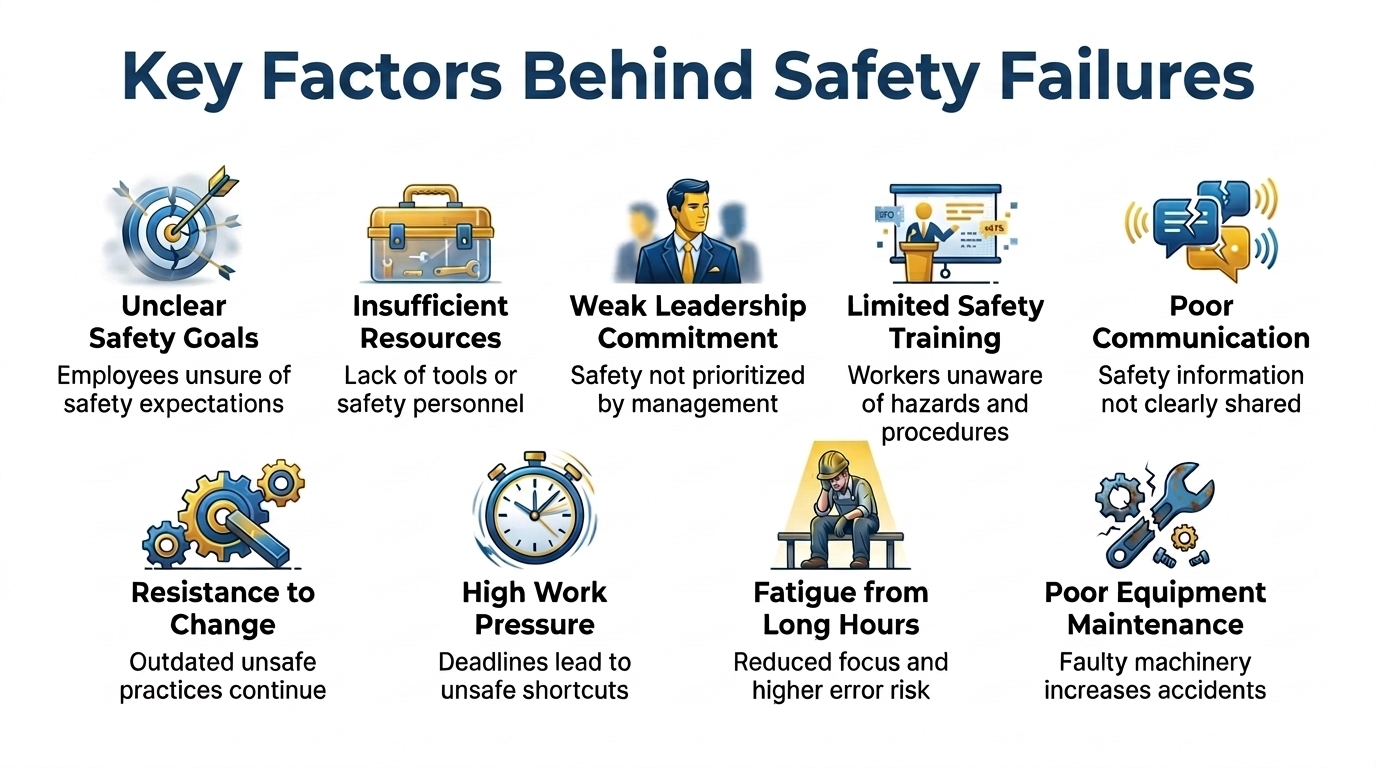
The Real Reasons Behind Safety Failures:
Safety incidents rarely occur due to a single mistake. In most cases, several workplace conditions and system weaknesses contribute to safety failures. Understanding these factors helps organizations improve safety systems rather than blaming individuals.
Why a Learning Culture Improves Workplace Safety
International standards such as ISO 45001 Occupational Health and Safety Management Systems emphasize the importance of continuous learning and open reporting in workplace safety.
A learning culture encourages organizations to treat incidents as opportunities to improve safety practices.
In organizations with a learning culture:
How Organizations Can Shift from Blame Culture to Learning Culture
Organizations can move from a blame culture to a learning culture by creating systems that encourage openness, fairness, and continuous improvement. This shift requires strong leadership support and active employee participation.
1.Role of Leadership
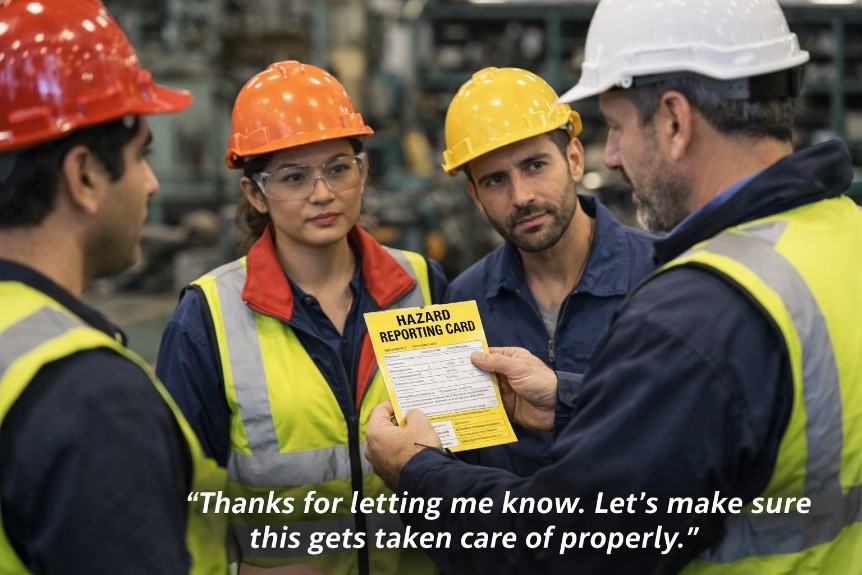
Leadership behaviour strongly influences workplace safety culture. Employees observe how leaders respond to incidents, mistakes, and safety concerns.
Organizations should ensure that leaders:
Consistent leadership actions help build trust and encourage employees to actively participate in workplace safety.
2.Developing a Speak-Up Safety Culture

A learning culture depends on open communication. Employees should feel confident reporting hazards and near misses without fear of punishment.
Organizations can support this by implementing:
When employees trust the reporting system, safety communication becomes part of everyday workplace practices
3.Strengthening Safety Management Practices

In addition to open reporting, organizations should strengthen their safety systems to support continuous improvement.
When employees trust the reporting system, safety communication becomes part of everyday workplace practices
Conclusion: Don’t Blame Investigate Risk Factors
Moving from a blame culture to a learning culture helps organizations build safer workplaces. Organizations that encourage learning, transparent communication, and fair incident investigations create an environment where safety becomes a shared responsibility.
If your organization is facing challenges such as under-reporting, repeated incidents, or low safety engagement, the issue may not lie in policies alone — it may be rooted in workplace culture.
Through professional HSE training, safety consultancy, and safety culture development programs, Green World Group helps organizations strengthen reporting practices, improve safety leadership, and build a proactive learning culture that supports long-term workplace safety. Team up with Green World…!
Contact Us
Kindly call our Experts @ +91 8121563728 / +91 8015527650 or mail us @ kalyan.r@greenwgroup.com / prathyusha.b@greenwgroup.com

Get Your Query Answered / Get Expert Assistance To Choose the Right Course for You Or Your Associates