Till the late 90s, asbestos remained a popular material in construction and industrial applications. This is because the material has excellent durability and heat resistance. However, it becomes a safety hazard when it is disturbed, damaged, or deteriorated, as it releases asbestos dust into the air.
Although asbestos is banned and strict regulations are in place, asbestos exposure remains a safety issue because most old buildings contain it. This is why it is important to build awareness of how to identify asbestos, conduct risk assessments, take control actions, and adhere to safety practices to protect workers.
Understanding the Risks of Asbestos
If the asbestos-containing materials are disturbed, demolished, drilled, or broken, tiny fibres can get released into the air and expose the risk of being inhaled. If such fibres remain suspended for longer periods in the air, it leads to serious health risks.
Prolonged asbestos exposure can lead to:
According to the reports, over 90,000 people worldwide lose their lives due to asbestos-related diseases each year. This means that if employees are given the essential training and practices to identify and address asbestos-related risks, they can mitigate the potential health complications.
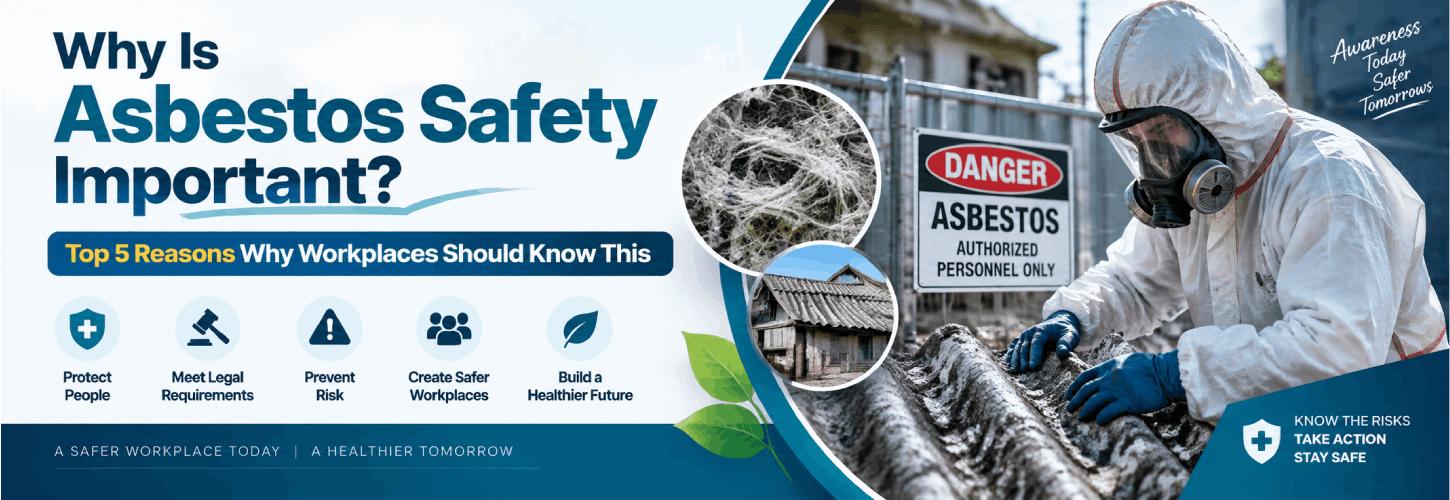
Top 5 Reasons Why Workplaces Should Know About Asbestos Safety
1. Reduces the dangers of asbestos exposure
Given the serious health issues associated with asbestos exposure, workplaces should have proper control measures that protect from asbestos exposure. Proper asbestos identification, removal, and handling of risks ensure asbestos is not airborne and prevent workers from inhaling fibres, ensuring a safe environment.
2. Protects Employees’ Health
Asbestos exposure can cause long-term and severe health risks. Hence, organizations must take a preventive approach that helps identify potential hazards and avoid exposure. Undertaking asbestos safety reduces the risk of asbestos-related diseases and demonstrates the commitment of organizations to workers’ health.
3. Prevents Fibre Release
Improper handling, disturbing, or damaging asbestos can release fibers into the air. Asbestos becoming airborne is dangerous to occupants and workers. Hence, identifying and properly handling asbestos-containing materials (ACMs) is crucial to prevent the release of fibres.
4. Ensures Safe Work Practices
Organizations should establish and maintain regulated zones, safer work practices, and proactive actions that protect their workers from asbestos exposure. Emphasizing and encouraging workers to wear appropriate PPE protects them from potential harm.
5. Cultivating a Safer Work Environment
Asbestos exposure not only harms workers’ lives. But also contaminates soil, water, and air, and causes long-term environmental damage. Hence, it is necessary to identify asbestos and properly remove it, making a safer workplace for all.
6. Legal Compliance
Asbestos remains a hidden hazard in most workplaces. So, employers are legally required to instill asbestos awareness among their employees through proper training. This ensures fulfilling legal liabilities and avoids financial burdens, ultimately fulfilling their duty to protect their workers.
OSHA 1910.1001, called the Asbestos Standard, has defined regulations that aim to safeguard workers from the workplace hazards of asbestos exposure.
Where can asbestos be found?
Buildings that were built before 2000 can contain asbestos, specifically in floor tiles, ceiling tiles, roof shingles, pipes, and walls of older buildings.
What to do if asbestos is suspected in the workplace?
If you found yourself exposed to asbestos at the workplace, you should:
What should every workplace consider for asbestos safety?
Organizations are responsible for the asbestos safety of their workers. Some of the essential considerations include:
Why should organizations consider Asbestos safety training?
Providing Asbestos Awareness Training to workers gives them the essential understanding of asbestos risks, safe working practices, legal responsibilities, and the knowledge and skills to minimize asbestos exposure. Regulation 10, Control of Asbestos, obliges employers to deliver training to their employees to ensure workplace safety and employee protection.
Conclusion
Asbestos-related diseases are extremely dangerous. Prevention is the best thing that organizations can do to protect the well-being of their workers. Ensuring that their employees have the understanding to identify asbestos, are proactive in addressing the hazards, and follow the appropriate safety practices when exposed to asbestos fibres protects lives.
Contact Us
Kindly call our Experts @ +91 8121563728 / +91 8015527650 or mail us @ kalyan.r@greenwgroup.com / prathyusha.b@greenwgroup.com

Get Your Query Answered / Get Expert Assistance To Choose the Right Course for You Or Your Associates